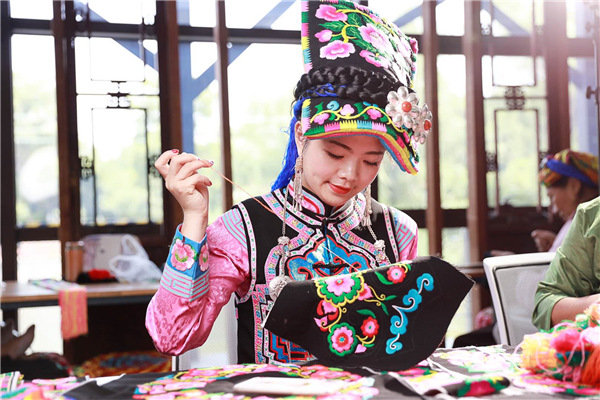
Qiang Embroidery
Introduction
Qiang Embroidery is a revered textile art from the Qiang ethnic group, one of China's oldest, residing in the mountainous Aba Tibetan and Qiang autonomous prefecture in Sichuan. Recognized as a national intangible cultural heritage, it embodies the Qiang's historical and cultural identity. Each piece is intricately crafted, often seen as a "silent love letter" conveying respect for nature and familial bonds. Known as "the people on the clouds" due to their high-altitude homes, the Qiang's embroidery reflects their lifestyle and deep connection to nature through unique motifs and rich symbolism.
History of Qiang Embroidery
Qiang embroidery is ancient, like the Qiang people themselves, who number around 310,000. Despite historical upheavals, they have maintained their cultural traditions. Without a written language, embroidery has been a key cultural expression, with patterns and motifs conveying their history and customs.
Following the devastating Wenchuan earthquake in 2008, which resulted in significant cultural and architectural loss for the Qiang, efforts to revive and sustain Qiang embroidery gained momentum. The earthquake not only destroyed numerous Qiang buildings and artifacts but also highlighted the urgent need to preserve their intangible cultural heritage. In response, government and local initiatives were launched to support Qiang embroidery as a means of cultural preservation and economic revitalization. These efforts have been crucial in revitalizing the art form, ensuring its continuation for future generations.
Techniques and Styles
Qiang embroidery is known for its distinct techniques and styles, combining traditional needlework with motifs reflecting the Qiang's environment and beliefs.
Stitching Techniques
Qiang embroidery employs various stitching techniques that have been refined over generations. The artisans use vibrant threads to create intricate designs, often incorporating multiple stitching methods that allow for textured and layered effects. The embroidery is not only an aesthetic pursuit but also a practical craft, with the skills being traditionally passed down from mothers to daughters. These techniques have been adapted over time to suit modern applications, while still preserving the traditional elements that make Qiang embroidery unique.
Patterns and Motifs
The patterns and motifs in Qiang embroidery are laden with symbolism and cultural significance. Common motifs include rhombus shapes, flowers, and geometric patterns, each representing different aspects of life and nature. For instance, outward-pointing arrows are emblematic of protection, reflecting the community's desire to safeguard their loved ones. The motifs often draw inspiration from the Qiang's natural environment, such as the mist-covered mountains and the flora native to their high-altitude homes. These patterns not only enhance the visual appeal of the embroidery but also serve as a visual storytelling medium, capturing the Qiang's collective memories and aspirations.
Cultural Significance
Qiang embroidery is a crucial link to the Qiang's history and identity, reflecting their traditions, beliefs, and way of life. It embodies their resilience and creativity, sustaining their cultural legacy amid modern challenges. Moreover, it has become a symbol of cultural pride and economic empowerment, with artisans like Yang Huazhen and Zhang Juyue promoting it internationally, turning it into a vibrant cultural industry that supports many women.
Preservation and Promotion
The preservation and promotion of Qiang embroidery are critical to ensuring the survival of this ancient art form. Efforts to safeguard Qiang embroidery have included governmental support programs, cooperative initiatives, and educational campaigns aimed at fostering new generations of embroiderers. National and international collaborations have also helped to raise the profile of Qiang embroidery, attracting interest from global brands and cultural institutions. These efforts not only highlight the cultural value of Qiang embroidery but also offer practical solutions for its preservation in contemporary society.
Workshops and training programs have been established to teach traditional embroidery techniques to young people and women, providing them with the skills needed to continue this heritage. Additionally, exhibitions and cultural festivals offer platforms for showcasing Qiang embroidery, allowing wider audiences to appreciate its beauty and cultural significance. As the world becomes increasingly aware of the importance of preserving intangible cultural heritage, Qiang embroidery continues to thrive as a testament to the enduring spirit of the Qiang people.








